Digital twins in industry: the quiet side of the metaverse
Factories, power grids and whole cities are being mirrored in real-time 3D. Digital twins rarely make headlines, but they may be where shared virtual spaces pay their way first.
While consumer virtual worlds have gone through hype, backlash and recovery, a less visible part of the field has simply kept growing. Factories, power grids, airports, hospitals and entire cities are being mirrored in real-time 3D. These digital twins rarely make headlines, but they may be where shared virtual spaces deliver their clearest return on investment.
What a digital twin is
A digital twin is a virtual model of a physical object, process or system that is kept in sync with its real counterpart through data. The idea is usually traced to Michael Grieves, who in 2002 presented a model for product lifecycle management at the University of Michigan built around three parts: a physical product, a virtual product, and the data flowing between them. NASA, which had long used simulators to mirror spacecraft — famously during the Apollo 13 rescue — adopted the term “digital twin” in its technology roadmaps around 2010.
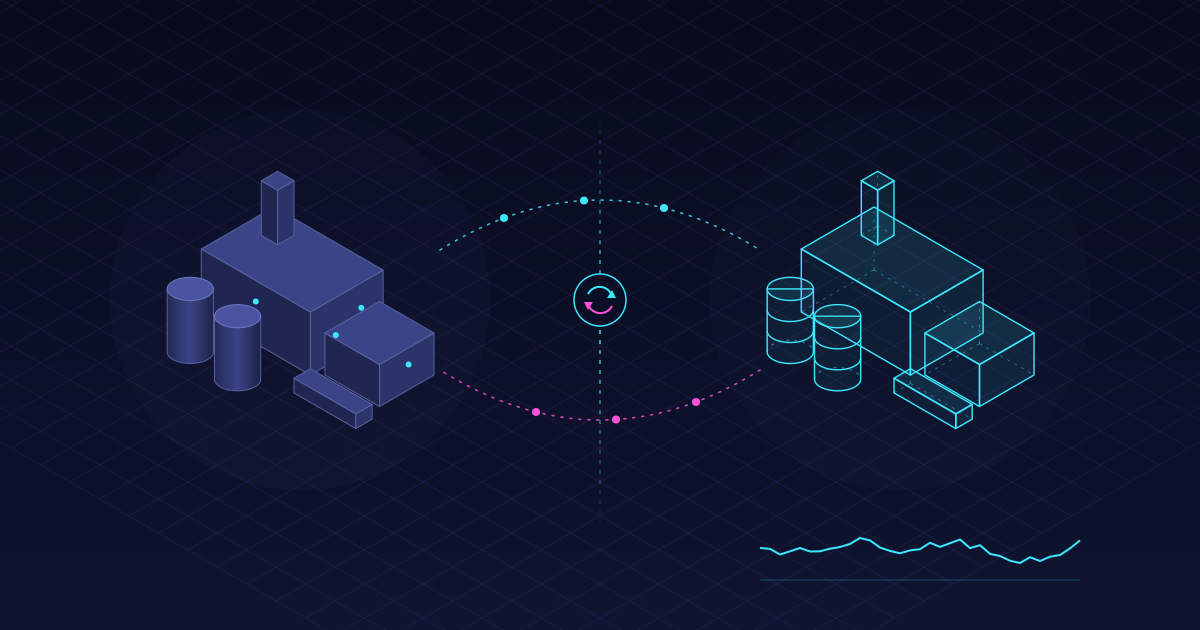
The distinction from an ordinary 3D model matters. A CAD drawing describes how something should be built. A simulation explores how it might behave. A twin is connected to the real thing: sensors report temperatures, vibrations, positions and flows, and the virtual model updates to match. Ideally the connection runs both ways, so that decisions tested in the twin can be applied to the physical system.
Where twins earn their keep
- Factory planning. Car makers and electronics manufacturers now lay out entire production lines virtually before a single machine is installed. BMW, for example, has publicly described planning plants in a shared real-time 3D environment built on NVIDIA’s Omniverse platform, letting engineers in different countries walk the same virtual factory together.
- Predictive maintenance. Twins of turbines, pumps and engines compare live sensor data with expected behaviour, flagging bearings or blades that are likely to fail weeks before they do. Jet engine makers have worked this way for years.
- Infrastructure and cities. Singapore’s national 3D model, developed through the Virtual Singapore programme, is one of the best-known city-scale examples. Planners use such models to study shadows, wind, flooding, traffic and evacuation routes before changing real streets.
- Energy. Grid operators model how power flows will shift as more wind and solar generation is connected, and rehearse responses to faults without risking blackouts.
- Healthcare. Hospitals simulate patient flows and bed capacity, and researchers are building patient-specific models of hearts and other organs to plan surgery. This work is early, but promising.
Why this is a metaverse story
At first glance a pump with a sensor has little to do with avatars and concerts. But the most advanced industrial twins share every ingredient of a metaverse platform: persistent 3D worlds, many users present at once, real-time synchronisation and a pressing need for interoperability. A single factory twin might combine building models from an architect, machine models from a dozen equipment suppliers, robot programs and live data from the plant floor. Without common formats, every combination becomes a costly custom integration.
That is why industrial companies have become some of the strongest backers of open 3D standards. OpenUSD, originally developed by Pixar for film production, has found a second life as a way to assemble large industrial scenes from many sources, and standards groups are working on how twins should describe assets and live data. We explore those formats in our guide to interoperability and open standards.
The hard parts
Digital twins are not magic, and the projects that disappoint tend to fail in familiar ways. Data quality is the first problem: a twin is only as accurate as the sensors and records behind it, and many older sites have neither. Scope creep is the second: trying to model everything at once usually produces a beautiful visualisation that nobody uses for decisions. Successful teams start with a narrow question — where is energy being wasted, which line is the bottleneck — and expand from there.
Security is the third. A twin that can push changes back into physical equipment is, by definition, a new way to reach that equipment. Industrial operators are rightly cautious about how tightly they connect the virtual and the real, and many keep the link strictly one-way.
The outlook
Expect digital twins to keep spreading in the least glamorous way possible: one plant, one building, one network at a time. Real-time engines borrowed from games, cheaper sensors and better standards are lowering the cost of each project. Within a few years, walking through a live virtual copy of a building before visiting the real one may feel as ordinary as checking a map.