Interoperability and open standards: OpenXR, glTF and USD explained
The unglamorous plumbing that could let virtual worlds connect is being built right now. What each of the key standards does, who stands behind it, and which problems no file format can solve.
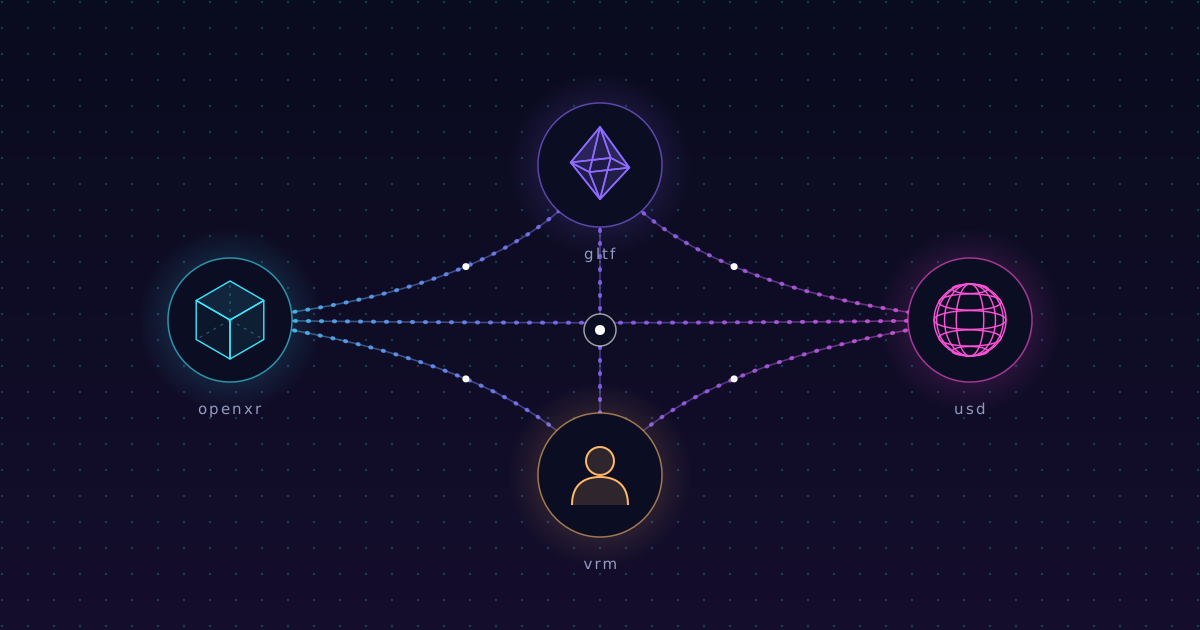
If one word separates the metaverse people talk about from the virtual worlds that actually exist, it is interoperability. The promise is simple: your avatar, your purchases, your creations and your friends should be able to move between worlds and devices the way an email moves between providers. The reality is a patchwork of incompatible engines, file formats and accounts. The good news is that the boring, essential plumbing is being built — mostly through a handful of open standards.
Three layers of the problem
It helps to split interoperability into layers:
- Devices and runtimes — can one application run on many headsets?
- Assets — can a 3D object, character or scene made in one tool be used in another?
- Identity, rules and economy — can a person, their reputation and their belongings carry over between worlds?
The first two layers now have serious, widely adopted standards. The third is where most of the unsolved problems live.
OpenXR: one interface for many headsets
In the early years of modern VR, each headset maker shipped its own software interface, and developers had to write and maintain separate versions of their apps for each one. OpenXR, developed by the Khronos Group — the industry consortium behind OpenGL and Vulkan — set out to fix that. Version 1.0 was released in 2019, and version 1.1, which folded many popular extensions into the core, followed in 2024.
OpenXR defines a common way for an application to talk to an XR runtime: tracking the head and hands, reading controllers and handing rendered images to the displays. Most major headset platforms support it, and the leading game engines use it as their default XR path. For developers it means writing an app once and shipping it to more devices; for buyers it means fewer exclusives and less lock-in. On the web, WebXR plays a similar role, letting a page in a compatible browser present immersive VR and AR without an app store.
glTF: the JPEG of 3D
glTF, also from Khronos, is a format for transmitting and loading 3D scenes efficiently, and it is often nicknamed “the JPEG of 3D”. Version 2.0 arrived in 2017 and was published as an international standard, ISO/IEC 12113, in 2022. A glTF file packages meshes, materials, textures, skeletons and animations in a form that is compact and quick for a real-time engine to load. Its physically based material model means a metal chair or a fabric sofa looks broadly the same in different viewers.
glTF has become the default for 3D on the web, in online product viewers and in many avatar systems. The VRM avatar format, popular in social VR and virtual streaming, is itself built on glTF, adding the conventions an avatar needs: standard bone names, facial expressions, eye movement and simple physics for hair and clothing.
OpenUSD: describing whole worlds
Universal Scene Description started life inside Pixar as a way for hundreds of artists to work on the same film shot without overwriting each other. Pixar open-sourced it in 2016, and in 2023 Pixar, Adobe, Apple, Autodesk and NVIDIA founded the Alliance for OpenUSD to develop it into a formal standard.
Where glTF excels at delivering a finished asset to a viewer, USD excels at composing large, complex scenes from many sources. Its system of layers and references lets an architect’s building, a supplier’s machine and an artist’s lighting each live in their own files and be combined non-destructively into one scene. That is why it has spread from film into industrial digital twins, robotics simulation and spatial computing. The two formats complement rather than compete with each other, and converting between them is increasingly routine.
The hard layer: identity and economy
Standards for running apps and moving files are necessary, but they do not by themselves let your avatar walk from one world into another. That requires agreement on far messier things: how big an avatar may be, what a sword does in a world without combat, who is responsible for moderating an item that came from elsewhere, and how purchases are honoured across companies with different business models.
The Metaverse Standards Forum, launched in 2022, was set up to coordinate this work across existing standards bodies rather than to write one grand new standard. It has drawn members from across the industry, and its working groups cover topics from 3D asset interoperability to digital fashion, privacy and the integration of real and virtual worlds. Progress is slow, as it was for the web in the 1990s, and much depends on whether large platforms see more value in open exchange than in keeping their users inside.
Why it matters for everyone else
Open standards rarely make headlines, but they decide whether creators can sell to more than one platform, whether your purchases outlive the company that sold them, and whether a small studio can compete with a giant. When you choose hardware or software, support for OpenXR, WebXR, glTF and USD is a reasonable sign that a company expects to live in a connected ecosystem rather than a walled garden — something worth weighing alongside the spec sheet in our headset buyer’s overview.